
István Nádler was born in Visegrád in 1938. He studied painting at the Hungarian University of Fine Arts from 1958 to 1963 under the mentorship of Gyula Hincz. He was a scholarship holder at the Museum Folkwang in Essen from 1971 to 1972 and was a member of the Budapest Collective from 1975 to 1979. In 1992, he moved to Rome as a scholar at the Hungarian Academy in Rome. Nádler received the Munkácsy Prize in 1986, was recognized as a Merited Artist in 1997, and was awarded the Kossuth Prize in 2001. His work was featured in the Iparterv exhibitions (1968, 1969), and he had a solo exhibition at the Museum Folkwang in Essen in 1974. He also exhibited at the Hungarian National Gallery in 1978 and at the Műcsarnok (Kunsthalle) in 1985 and 2001. In 1986, he represented Hungary at the XLII Venice Biennale alongside Károly Kelemen, Ákos Birkás, and Imre Bak. His works can be found in numerous major public collections, including the Centre Pompidou, Paris.
His art is deeply connected to the historical tradition of Hungarian art, particularly as represented by Lajos Kassák, as well as to Hungarian and international constructivism and neo-avant-garde movements. His early paintings are closely aligned with the hard-edge approach, often incorporating stylized folkloric elements within geometric surfaces. The hard-edge works he encountered at the American Pavilion of the 1964 Venice Biennale had a profound impact on his painting. Around this time, he developed his own formal language, which he continued to use until 1980. Paintings from this period are characterized by closed forms confined within the canvas edges and by systems that organize space from within outward. Early geometric works prominently featured stylized folkloric motifs. In the 1980s, his painting underwent an apparent shift back to the gestural painting of the 1960s. His compositions began to emphasize spontaneous painterly improvisation, randomness, and the momentary. The painting space and the work itself became a radiant energy center, capturing a specific state of existence rather than documenting a pre-planned conceptual-logical process. He continues to work in this idiom to this day.
From the beginning, Nádler’s work has been inspired by classical art, trends in abstract painting, the natural scenery of Feketebács, and traditional Far Eastern music. As of the spring of 2024, his oeuvre is represented by Einspach & Czapolai Fine Art.
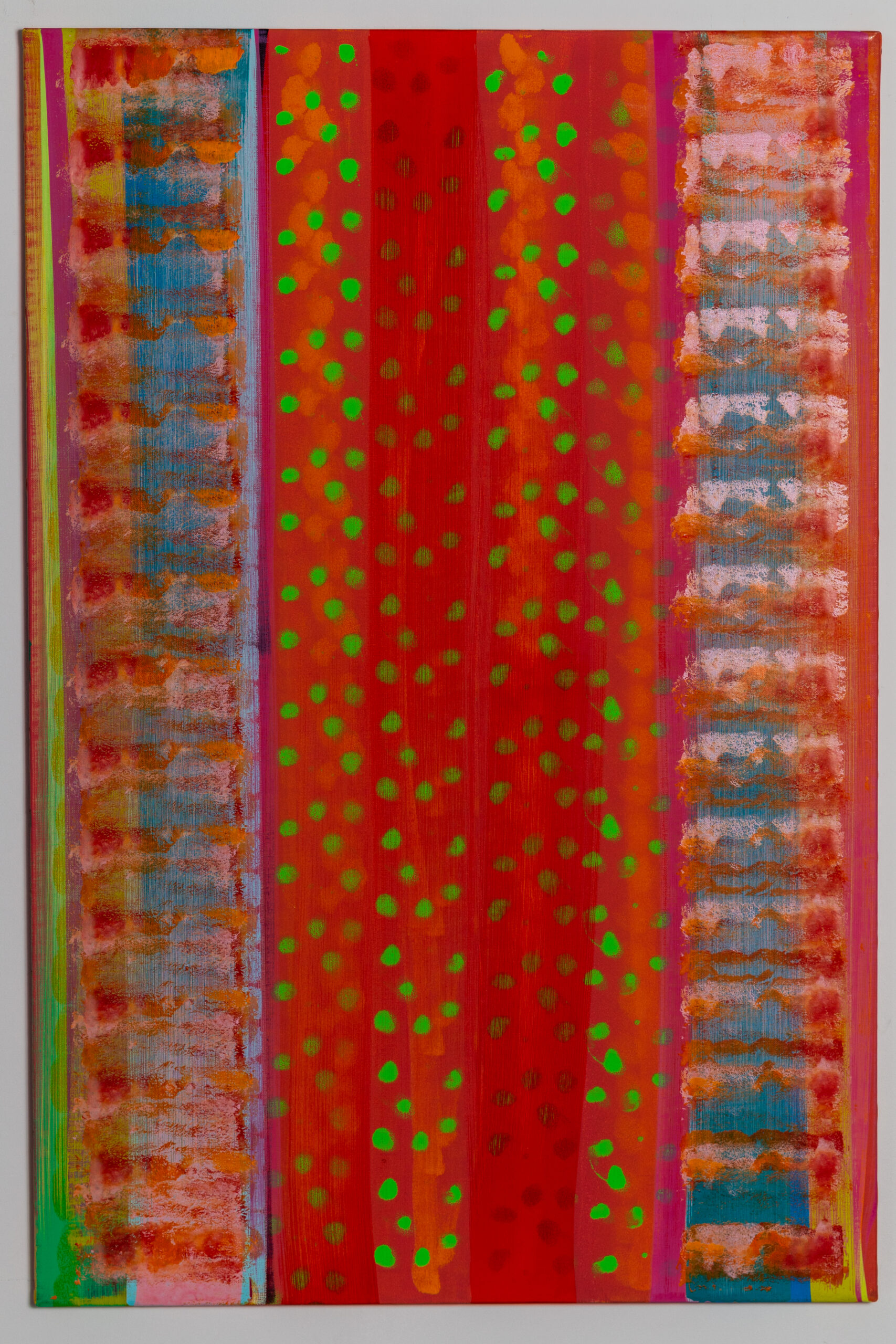
István Nádler
Fb. No3, 2008
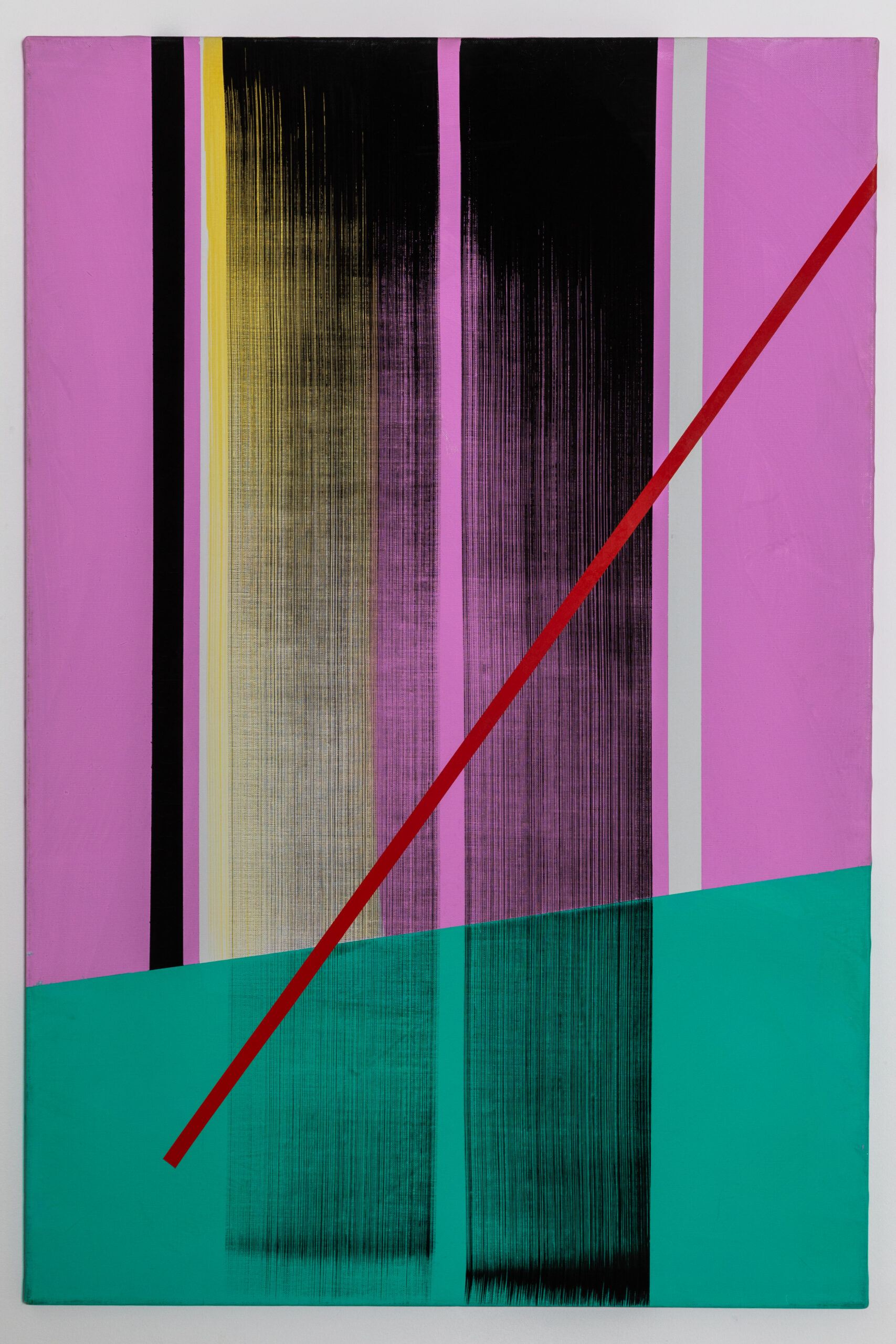
István Nádler
February I., 2007
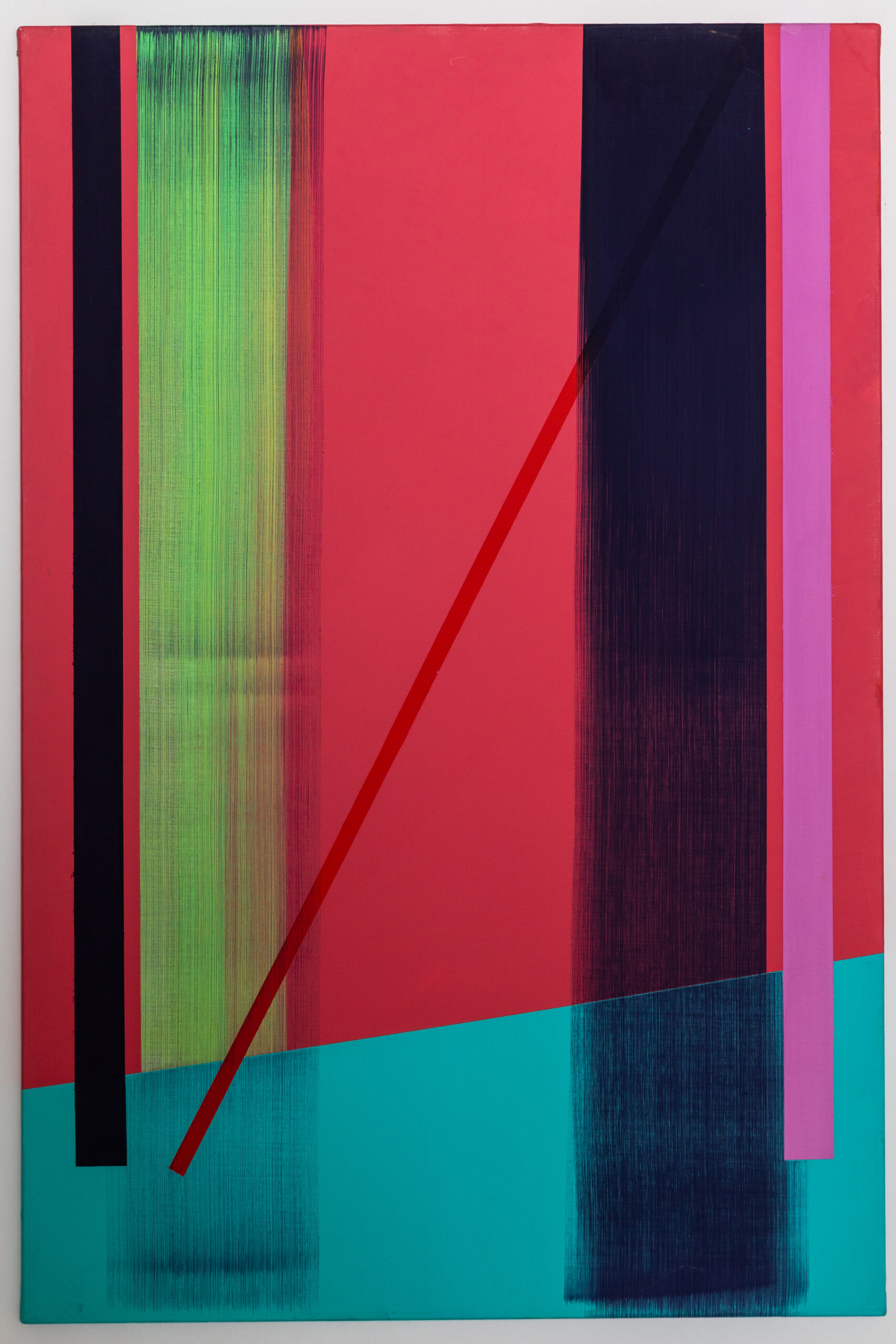
István Nádler
February II., 2007
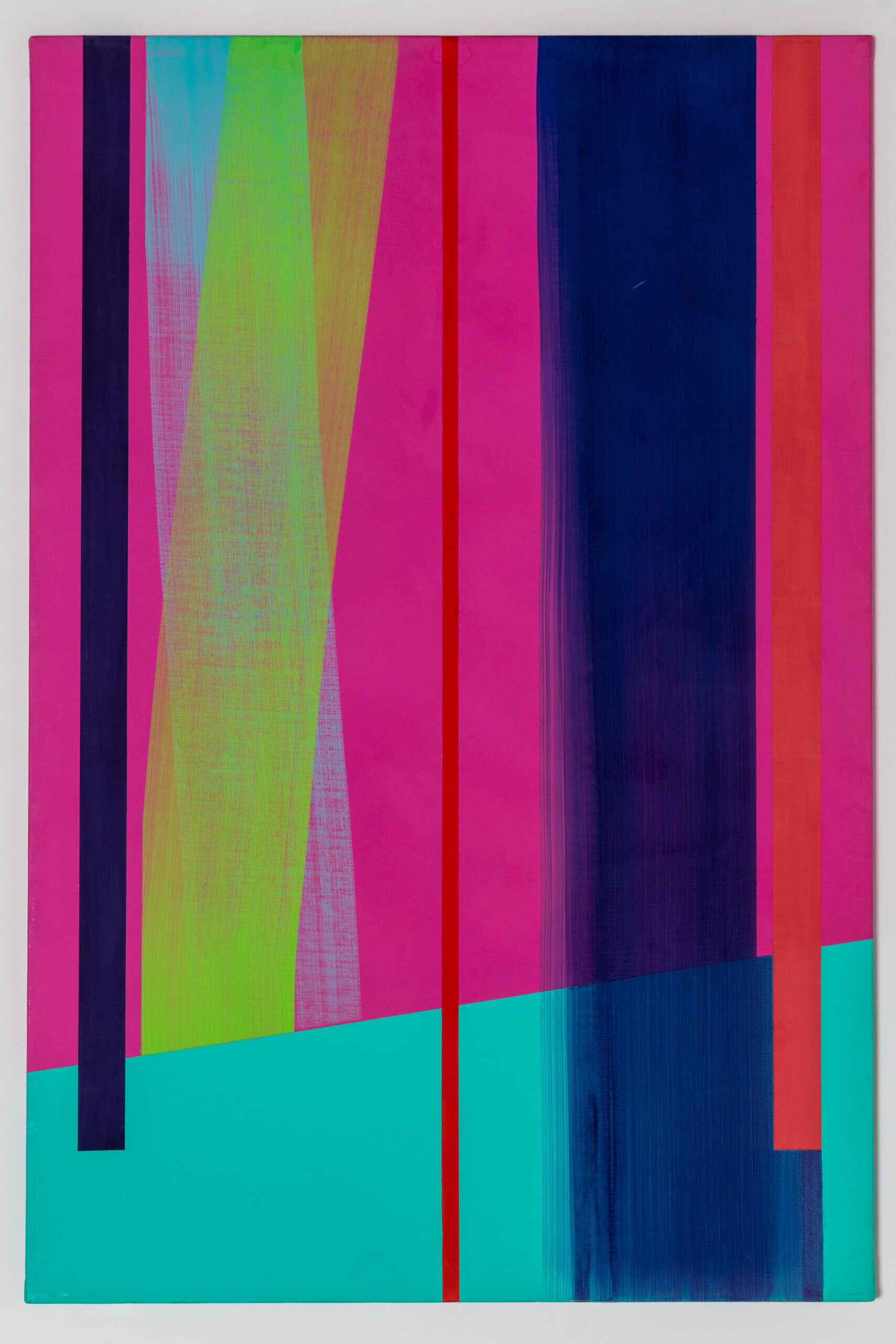
István Nádler
February IV., 2007
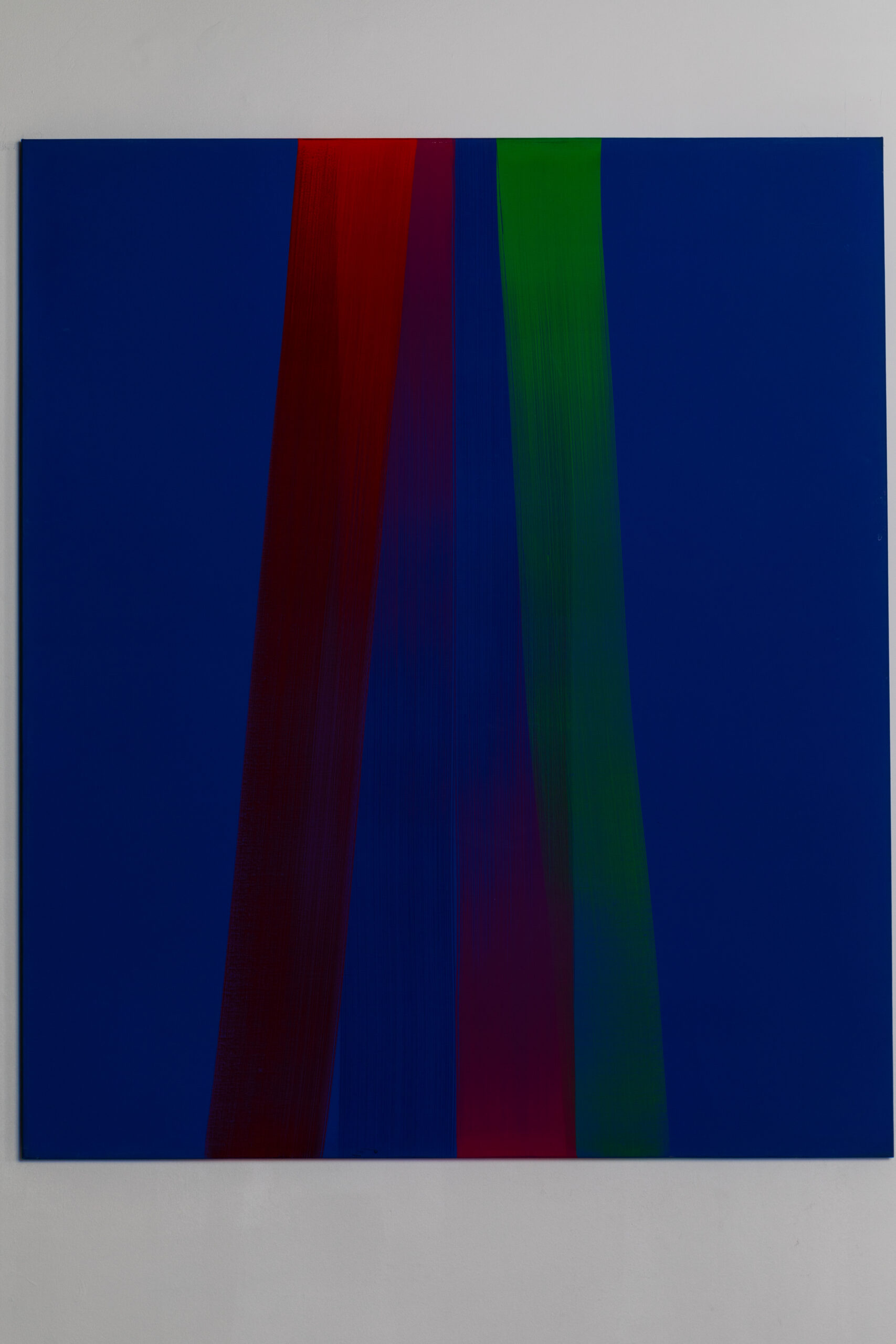
István Nádler
Budapest Jan., 2008