
Daniele Sigalot
Flags of No Nation #1 (Nessuno è puro)
Poliestere nautico, 2024
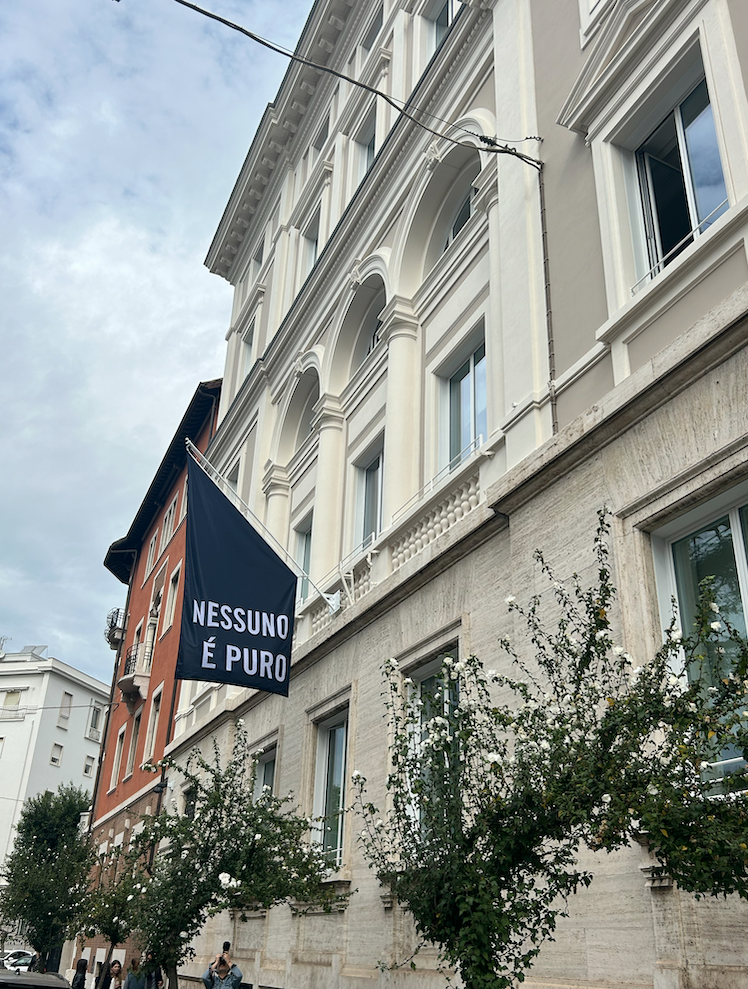
La nuova serie di opere di Daniele Sigalot, intitolata Flags of No Nations, verrà presentata nel 2025 a Istanbul e rappresenta una riflessione profonda e universale sul potere del linguaggio. In questa serie, le bandiere, simboli tradizionalmente associati all’identità nazionale, perdono i loro colori e simboli per lasciare spazio esclusivamente alle parole. Il primo esempio di questa nuova produzione è una grande bandiera issata sul pennone del palazzo DLA Piper in Via Po. Su di essa campeggia il messaggio “NESSUNO È PURO”, un’affermazione tanto semplice quanto potente, che va oltre i confini geografici e sociali, abbracciando ogni individuo.
Questo messaggio, dal sapore quasi biblico, riflette una verità universale che sfida ogni pretesa di perfezione o moralità assoluta. Contestualizzato sulla facciata di un grande studio legale, esso acquista un significato ancora più incisivo: chi, se non gli avvocati, è costantemente in bilico tra leggi e compromessi, tra giustizia e ambiguità morale? La bandiera sembra rivolgersi non solo a chi lavora all’interno del palazzo, ma anche a chi vi entra come cliente, cercando servizi e soluzioni spesso immersi in zone grigie. Allo stesso tempo, il messaggio è visibile ai passanti, trasformando Via Po in un palcoscenico per una riflessione collettiva. Chi è davvero il destinatario di questa bandiera? Forse ognuno di noi, in quanto esseri umani fallibili, in costante dialogo con la complessità delle nostre scelte.
Flags of No Nations si propone così come un invito alla riflessione, decostruendo i simboli di appartenenza nazionale e trasformando la bandiera in un mezzo per comunicare verità universali, che interrogano l’etica individuale e collettiva.
Daniele Sigalot’s new series of works, titled Flags of No Nations, will be presented in 2025 in Istanbul and represents a profound and universal reflection on the power of language. In this series, flags—traditionally symbols associated with national identity—lose their colors and symbols to make room solely for words. The first example of this new production is a large flag hoisted on the flagpole of the DLA Piper building on Via Po. Prominently displayed on it is the message “NESSUNO È PURO” (“NO ONE IS PURE”), a statement that is as simple as it is powerful, transcending geographical and social boundaries to embrace every individual.
This message, with an almost biblical flavor, reflects a universal truth that challenges any claims of perfection or absolute morality. Contextualized on the façade of a large law firm, it gains an even more incisive meaning: who, if not lawyers, constantly balances between laws and compromises, between justice and moral ambiguity? The flag seems to address not only those who work within the building but also those who enter as clients, seeking services and solutions often steeped in gray areas. At the same time, the message is visible to passersby, transforming Via Po into a stage for collective reflection. Who is truly the recipient of this flag? Perhaps each of us, as fallible human beings, is in constant dialogue with the complexity of our choices.
Flags of No Nations thus serves as an invitation to reflection, deconstructing the symbols of national belonging and transforming the flag into a means of communicating universal truths that question both individual and collective ethics.
Daniele Sigalot
Inconsistently logical
Lacca acrilica su ferro, 2024
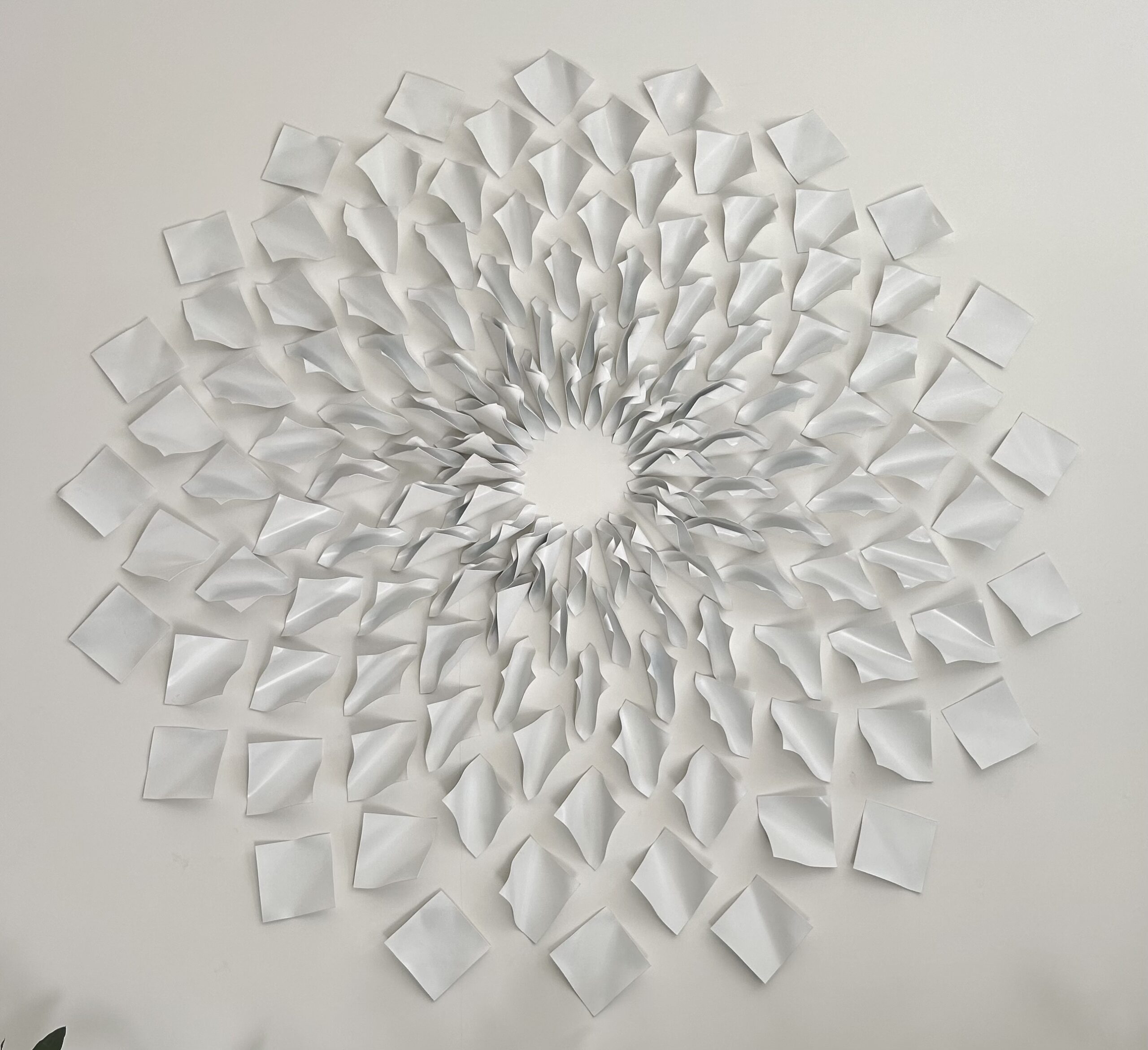
Daniele Sigalot, artista noto per il suo approccio ironico e concettuale, ha esplorato a fondo il tema dell’errore, trasformandolo in un elemento centrale della sua produzione artistica. La sua installazione Inconsistently Logical ne è un esempio significativo. In quest’opera, l’artista utilizza fogli metallici che, sorprendentemente, appaiono come fragili fogli di carta. Ogni foglio bianco, simbolo dell’inizio del processo creativo, si piega e si accartoccia progressivamente, rappresentando idee scartate o percepite come sbagliate. Sigalot crea così una riflessione sull’errore, mostrandolo non come un ostacolo, ma come una tappa fondamentale nel percorso creativo. Il picco di questa serie di opere dedicate agli sbagli è Master of Mistakes, una grande scultura sferica esposta all’aeroporto di Fiumicino, che celebra in maniera definitiva il valore del fallimento. Sigalot eleva gli errori al rango di maestri dell’arte, dimostrando che la loro mera somma può emanciparli dalla loro natura e trasformarli in un’opera d’arte.
Daniele Sigalot, an artist known for his ironic and conceptual approach, has thoroughly explored the theme of error, transforming it into a central element of his artistic production. His installation Inconsistently Logical is a significant example of this. In this work, the artist employs metallic sheets that surprisingly resemble fragile sheets of paper. Each white sheet, symbolizing the beginning of the creative process, progressively bends and crumples, representing discarded ideas or those perceived as incorrect. Sigalot thus creates a reflection on error, presenting it not as an obstacle but as a fundamental milestone in the creative journey. The pinnacle of this series dedicated to mistakes is Master of Mistakes, a large spherical sculpture exhibited at Fiumicino Airport, which definitively celebrates the value of failure. Sigalot elevates errors to the rank of masters of art, demonstrating that their mere accumulation can emancipate them from their nature and transform them into a work of art.
Daniele Sigalot
187 paper planes simultaneously hitting the wall
Lacca acrilica su alluminio, 2024
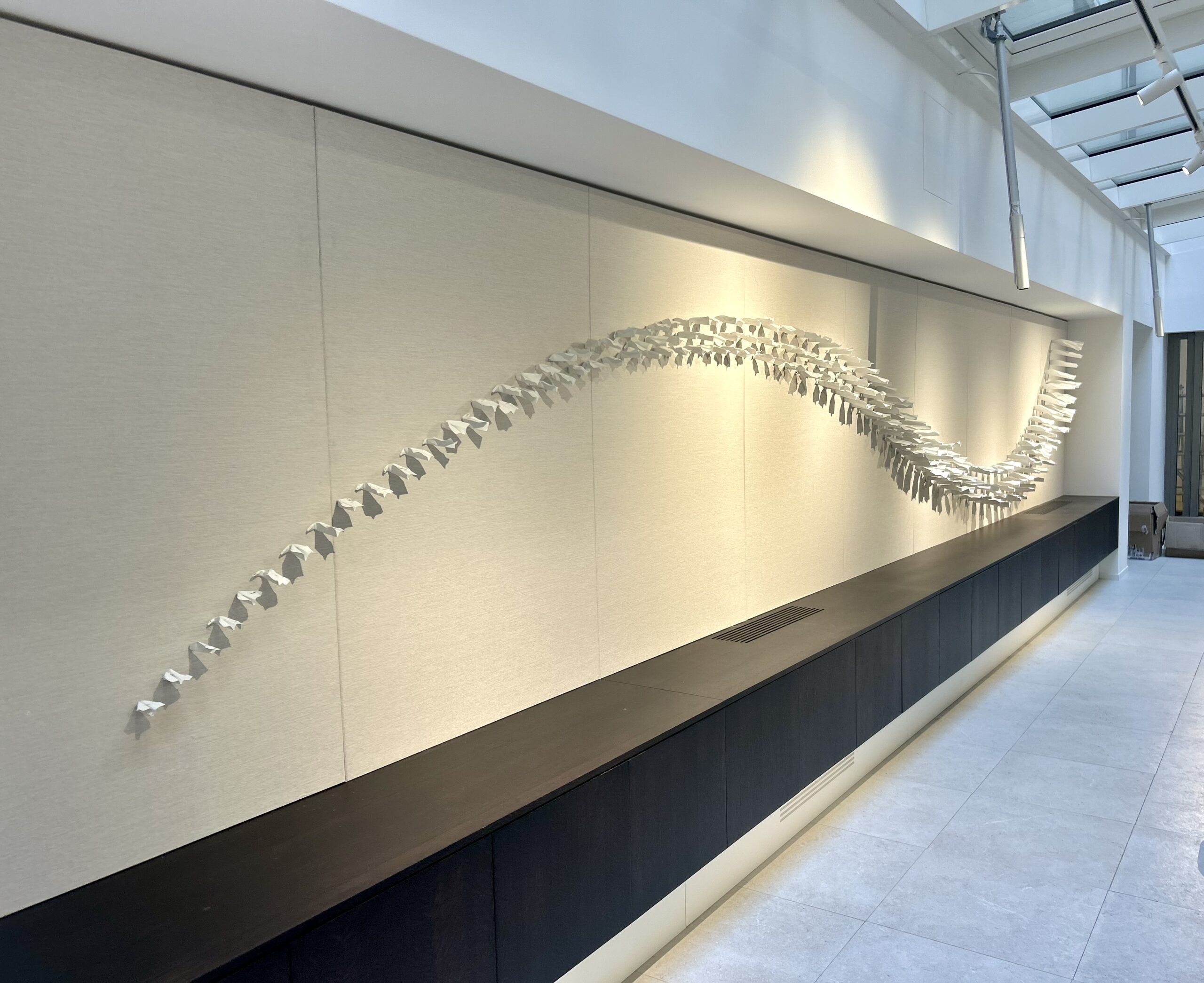
L’installazione 187 Paper Planes Simultaneously Hitting the Wall di Daniele Sigalot si configura come un sofisticato gioco di percezioni e una riflessione sull’essenza stessa dell’arte contemporanea. Sigalot inganna deliberatamente lo spettatore, proponendo un oggetto apparentemente banale e facilmente riconoscibile come l’aeroplanino di carta, ma che, in realtà, si rivela essere di alluminio, sfidando così le aspettative sensoriali di chi osserva. L’artista, con sottile ironia, prende in giro il pubblico, spingendolo a interrogarsi sulla natura stessa della sua opera: da un lato, la materia inganna, dall’altro, l’idea che un oggetto tanto semplice possa essere elevato a oggetto artistico cozza con la complessità a volte ostica e criptica dell’arte contemporanea. Tuttavia, il vero colpo di scena è che questa semplicità è solo illusoria. L’apparente immediatezza dell’opera nasconde una complessità esecutiva notevole, dove la coralità e la ripetizione seriale degli aeroplanini richiedono tecnica e visione che trascendono la banalità del soggetto. Sigalot cita, non senza malizia, l’opera di Gino De Dominicis, Palla di gomma caduta da due metri nell’attimo immediatamente precedente il rimbalzo, catturando simbolicamente l’istante esatto in cui 187 aeroplanini colpiscono simultaneamente il muro. Questo gesto, apparentemente leggero e giocoso, si carica di una valenza simbolica profonda: l’aeroplanino, emblema dell’infanzia e della leggerezza, viene qui arrestato nel suo volo, in uno scontro con il muro, simbolo di un viaggio che trova una sua fine definitiva. La serie dei Paper Planes, iniziata nel 2011, ha raggiunto una dimensione monumentale nel 2015, quando Fendi ha scelto proprio questa tipologia di opere per lanciare la sua nuova collezione, riempiendo con oltre 5000 aerei metallici le pareti di 32 flagship store in tutto il mondo. Sigalot coniuga sapientemente l’apparente leggerezza e la profondità concettuale, invitando lo spettatore a riflettere sul confine sottile tra il quotidiano e l’arte.
The installation 187 Paper Planes Simultaneously Hitting the Wall by Daniele Sigalot manifests as a sophisticated play of perceptions and a reflection on the very essence of contemporary art. Sigalot deliberately deceives the viewer by presenting an object that appears banal and easily recognizable—the paper airplane—which, in reality, is made of aluminum, thus challenging the sensory expectations of the observer. With subtle irony, the artist pokes fun at the audience, prompting them to question the nature of his work: on one hand, the material deceives; on the other, the idea that such a simple object can be elevated to the status of an artistic object clashes with the sometimes daunting and cryptic complexity of contemporary art. However, the true twist is that this simplicity is merely illusory. The apparent immediacy of the work conceals remarkable executional complexity, where the chorus and serial repetition of the airplanes demand a technique and vision that transcend the banality of the subject. Sigalot, with a touch of mischief, alludes to Gino De Dominicis’s work, Rubber Ball Dropped from Two Meters Just Before Bouncing, symbolically capturing the exact moment when 187 airplanes simultaneously hit the wall. This gesture, seemingly light and playful, carries a profound symbolic significance: the airplane, emblematic of childhood and lightness, is here arrested in its flight, colliding with the wall, a symbol of a journey that finds its definitive end. The series of Paper Planes, which began in 2011, reached a monumental dimension in 2015 when Fendi chose this type of work to launch its new collection, filling the walls of 32 flagship stores worldwide with over 5,000 metallic airplanes. Sigalot skillfully combines apparent lightness with conceptual depth, inviting the viewer to reflect on the thin boundary between the everyday and art.
Daniele Sigalot
Clearly not a paper plane I
Lacca acrilica su alluminio, 2024
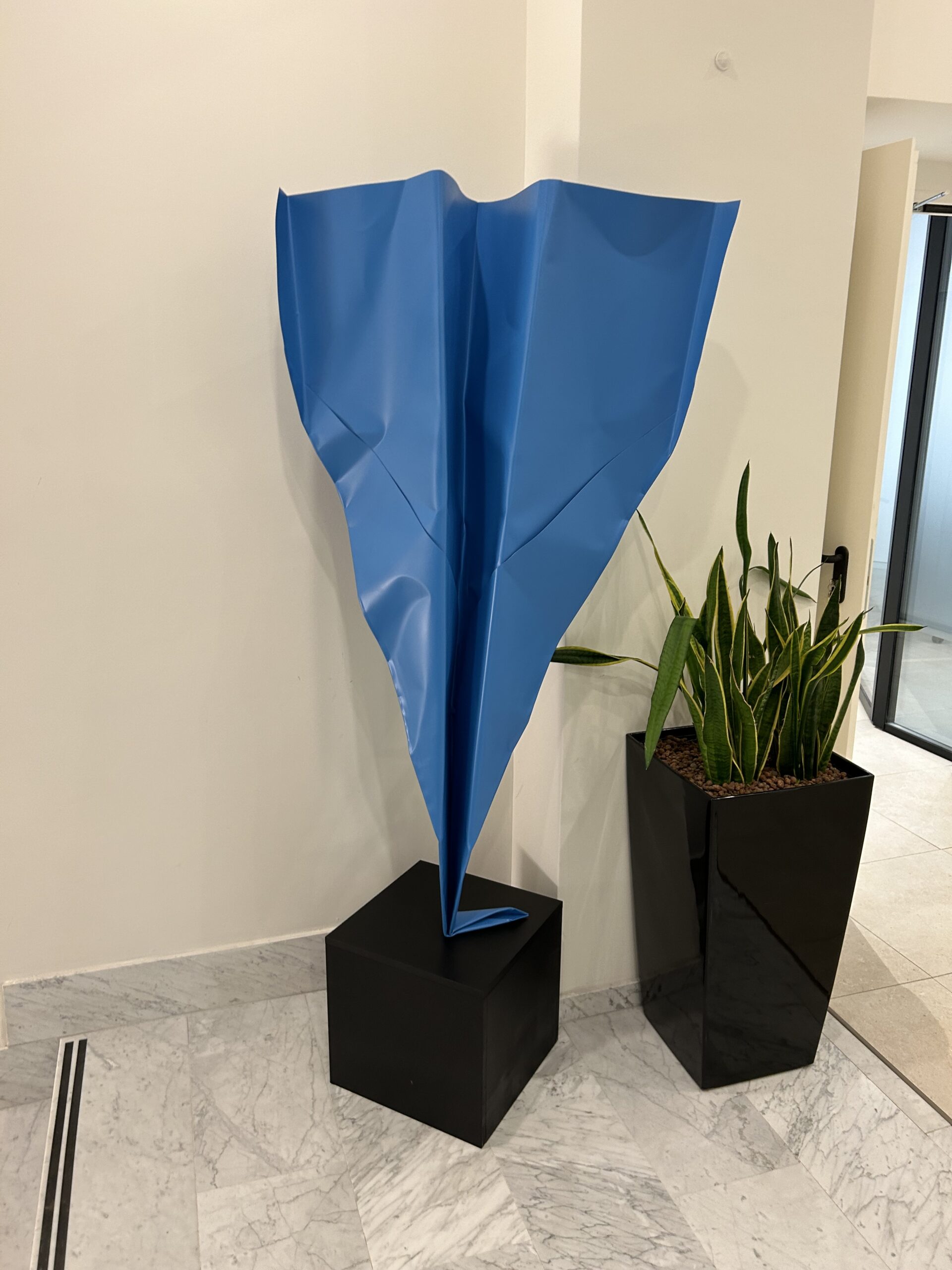
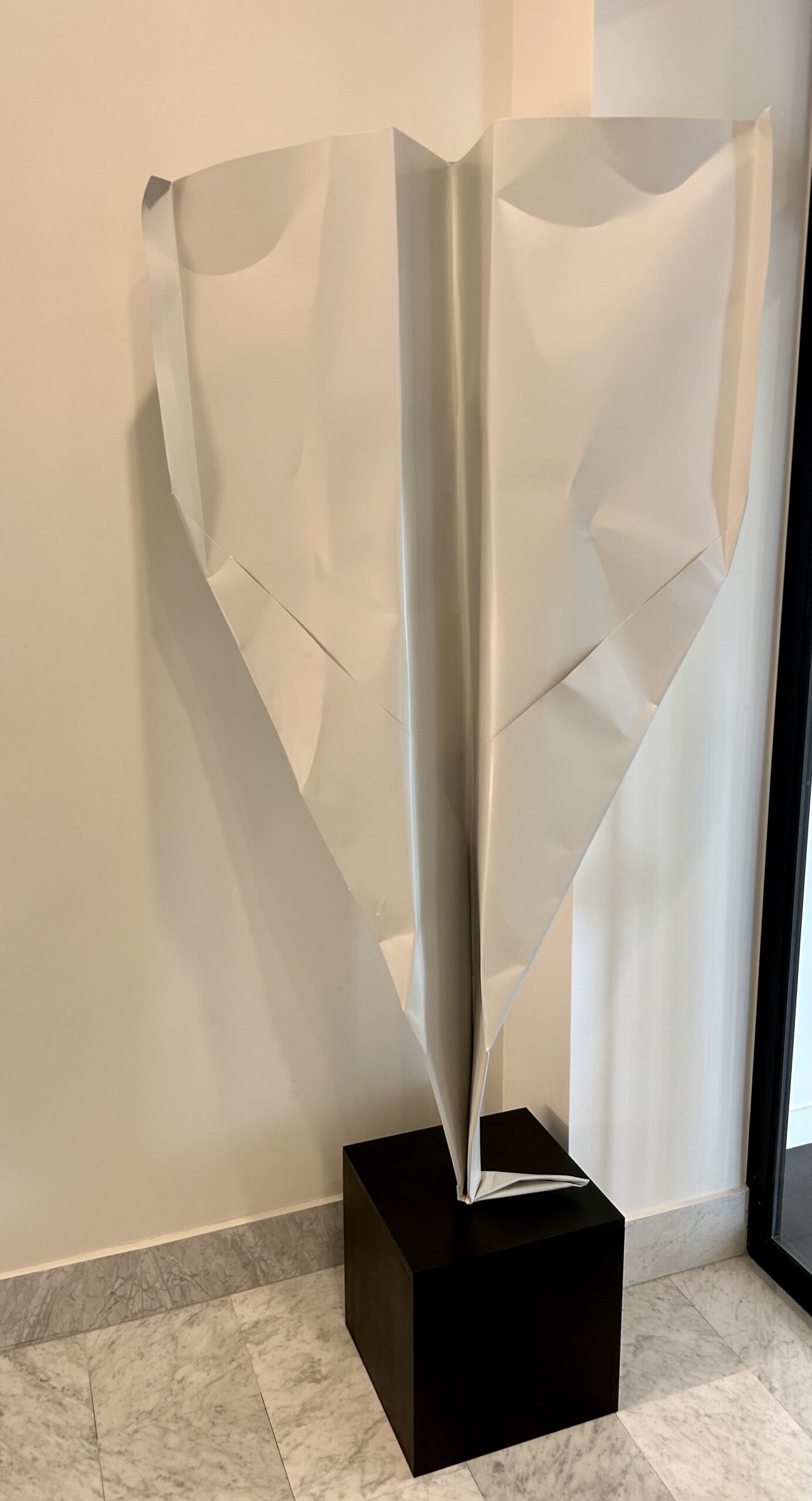
Clearly Not a Paper Plane, fin dal titolo che richiama il celebre “Ceci n’est pas une pipe” di Magritte, si pone con ironia nei confronti dello spettatore. L’aeroplanino di carta, simbolo di un oggetto semplice e accessibile a tutti, è l’antitesi dell’arte tradizionale, spesso percepita come esclusiva ed elitaria. Con questa scultura, Sigalot sfida queste convenzioni: prende un oggetto banale, apparentemente alla portata di chiunque, e lo eleva a opera d’arte, prima di tutto attraverso la sua dimensione e poi attraverso l’inganno materico, poiché ciò che sembra carta è in realtà metallo. Il titolo sottolinea proprio questa ambiguità: l’artista gioca con le aspettative del pubblico, proponendo un oggetto apparentemente semplice, ma che rivela una complessità concettuale e tecnica.
Clearly Not a Paper Plane, from the title itself which recalls Magritte’s famous “Ceci n’est pas une pipe,” approaches the viewer with irony. The paper plane, a symbol of a simple and accessible object, stands as the antithesis of traditional art, which is often seen as exclusive and elitist. With this sculpture, Sigalot challenges such conventions: he takes a banal object, seemingly within anyone’s reach, and elevates it to the status of art, first through its scale and then through the material deception, as what appears to be paper is actually metal. The title emphasizes this ambiguity: the artist plays with the viewer’s expectations, presenting an apparently simple object that reveals a deeper conceptual and technical complexity.
Daniele Sigalot
Clearly not a paper plane II
Lacca acrilica su alluminio, 2024
Clearly Not a Paper Plane, fin dal titolo che richiama il celebre “Ceci n’est pas une pipe” di Magritte, si pone con ironia nei confronti dello spettatore. L’aeroplanino di carta, simbolo di un oggetto semplice e accessibile a tutti, è l’antitesi dell’arte tradizionale, spesso percepita come esclusiva ed elitaria. Con questa scultura, Sigalot sfida queste convenzioni: prende un oggetto banale, apparentemente alla portata di chiunque, e lo eleva a opera d’arte, prima di tutto attraverso la sua dimensione e poi attraverso l’inganno materico, poiché ciò che sembra carta è in realtà metallo. Il titolo sottolinea proprio questa ambiguità: l’artista gioca con le aspettative del pubblico, proponendo un oggetto apparentemente semplice, ma che rivela una complessità concettuale e tecnica.
Clearly Not a Paper Plane, from the title itself which recalls Magritte’s famous “Ceci n’est pas une pipe,” approaches the viewer with irony. The paper plane, a symbol of a simple and accessible object, stands as the antithesis of traditional art, which is often seen as exclusive and elitist. With this sculpture, Sigalot challenges such conventions: he takes a banal object, seemingly within anyone’s reach, and elevates it to the status of art, first through its scale and then through the material deception, as what appears to be paper is actually metal. The title emphasizes this ambiguity: the artist plays with the viewer’s expectations, presenting an apparently simple object that reveals a deeper conceptual and technical complexity.
Daniele Sigalot
Doesn’t it
Lacca acrilica su alluminio, 2024
La serie di opere sui Post-it giganti di Daniele Sigalot rappresenta una brillante e irriverente satira sul mondo dell’arte contemporanea. Come in altre sue creazioni, l’artista gioca sulla dicotomia tra apparenza e sostanza, utilizzando materiali metallici che replicano perfettamente l’estetica fragile e transitoria della carta. I Post-it non sono semplici oggetti di uso quotidiano, ma diventano veicoli di messaggi ironici, destinati a smascherare la pomposità e l’autoreferenzialità del sistema artistico al quale Sigalot stesso appartiene. In questa serie, avviata nel 2011, l’artista rispolvera la sua esperienza come copywriter presso Saatchi&Saatchi, trasformando la sua padronanza della parola in un’arma critica, utilizzata per colpire curatori, collezionisti, galleristi e persino se stesso.
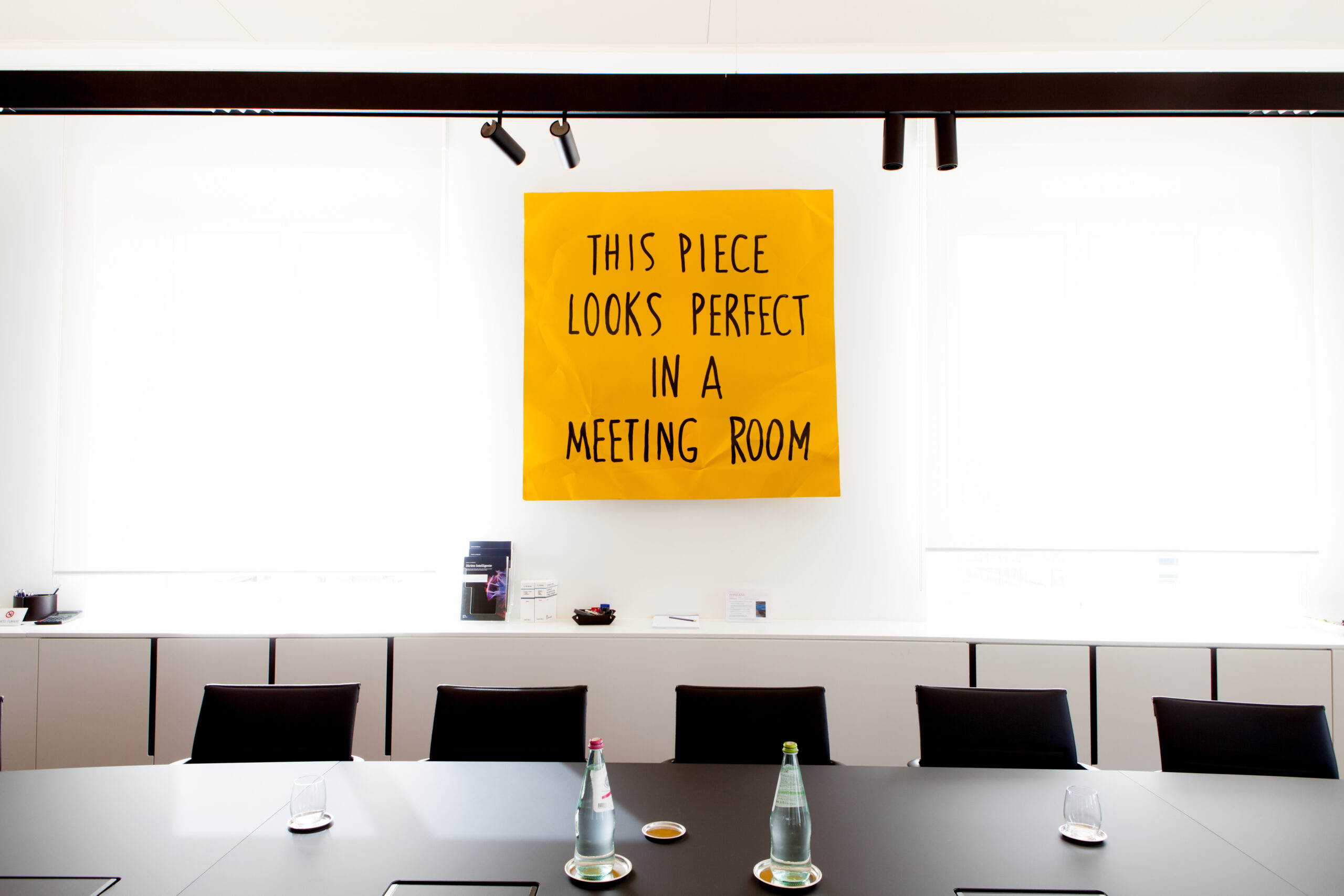
Con l’opera DOESN’T IT?, Sigalot incarna perfettamente questa ironia: il titolo dell’opera è l’appendice della frase riportata sul Post-it, “THIS PIECE LOOKS PERFECT IN A MEETING ROOM”, un chiaro rimando agli stereotipi superficiali che spesso dominano i discorsi intorno all’arte. Sigalot riproduce con precisione i luoghi comuni che riempiono le conversazioni di chi orbita nel mondo dell’arte, smontandoli con perfidia e leggerezza. Questi Post-it giganti, pur mantenendo l’aspetto innocuo di un oggetto quotidiano, diventano un mezzo potente di critica sociale e culturale, mostrando come anche la più semplice delle frasi, ripetuta nel contesto giusto, possa acquisire un’aura di autorevolezza. In questo modo, Sigalot demistifica il linguaggio dell’arte contemporanea, evidenziando il divario tra la serietà con cui certe affermazioni vengono pronunciate e la loro effettiva banalità.
Daniele Sigalot’s series of giant Post-it works represents a brilliant and irreverent satire on the world of contemporary art. As in his other creations, the artist plays on the dichotomy between appearance and substance, using metallic materials that perfectly replicate the fragile and transient aesthetic of paper. The Post-its are not mere everyday objects; they become vehicles for ironic messages, aimed at exposing the pompousness and self-referentiality of the art system to which Sigalot himself belongs.
In this series, initiated in 2011, the artist revives his experience as a copywriter at Saatchi & Saatchi, transforming his mastery of words into a critical weapon used to strike at curators, collectors, gallery owners, and even himself. With the work DOESN’T IT?, Sigalot perfectly embodies this irony: the title of the piece is the appendix to the phrase written on the Post-it, “THIS PIECE LOOKS PERFECT IN A MEETING ROOM,” a clear reference to the superficial stereotypes that often dominate discussions around art. Sigalot meticulously reproduces the clichés that fill the conversations of those orbiting in the art world, dismantling them with wit and lightness.
These giant Post-its, while retaining the harmless appearance of an everyday object, become a powerful means of social and cultural critique, demonstrating how even the simplest of phrases, when repeated in the right context, can acquire an aura of authority. In this way, Sigalot demystifies the language of contemporary art, highlighting the gap between the seriousness with which certain statements are made and their actual banality.

Daniele Sigalot
Superficial
Stampa a inchiostro su hahnemuhle supersmooth photo rag 308, 2020
La serie fotografica SUPERFICIAL segna l’esordio di Daniele Sigalot nel campo della fotografia. Questa serie riflette sulla superficialità dell’essere umano e del mondo dell’arte. L’immagine ambisce deliberatamente a un equilibrio estetico, dove gli elementi aria, fuoco e acqua condividono lo spazio dell’opera, lasciando lo spettatore suggestionato. Sigalot mira a creare qualcosa di bello attraverso un gesto personale; la sua mano emerge dall’acqua in una performance di un minuto di apnea, documentata senza alcuna post-produzione. La fotografia cerca di esaltare il bello, mettendo in secondo piano la mano che regge il fumogeno, simbolo di una richiesta di aiuto in mare. Questa stessa superficialità riflette come spesso un’opera venga venduta, magari solo per una preferenza di colore piuttosto che per un significato più profondo. Con SUPERFICIAL, Sigalot invita il pubblico a riflettere sulle complessità che si celano sotto la superficie.
The photographic series SUPERFICIAL marks Daniele Sigalot’s debut in the field of photography. This series reflects on the superficiality of human beings and the art world. The image deliberately strives for an aesthetic balance, where the elements of air, fire, and water share the space of the artwork, leaving the viewer intrigued. Sigalot aims to create something beautiful through a personal gesture; his hand emerges from the water in a performance lasting one minute of apnea, documented without any post-production. The photograph seeks to exalt beauty, downplaying the hand holding the smoke grenade, a symbol of a cry for help in the sea. This same superficiality reflects how often a work is sold, perhaps merely based on a preference for color rather than for a deeper meaning. With SUPERFICIAL, Sigalot invites the audience to reflect on the complexities that lie beneath the surface.